
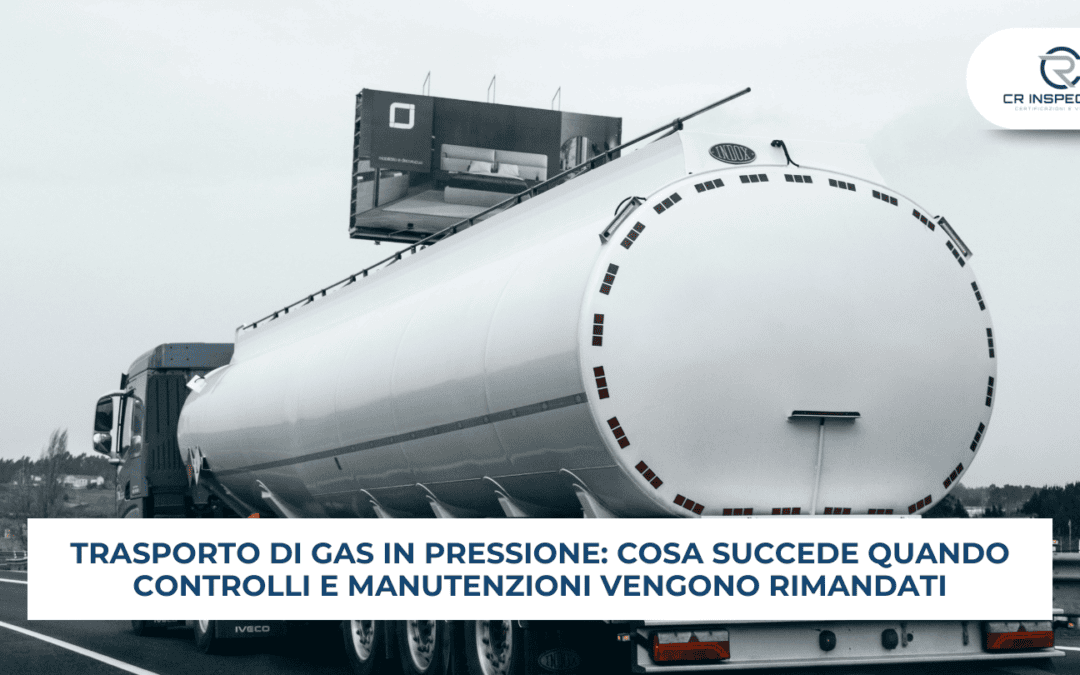
Transportable pressure equipment regulated by TPED regulations (such as tanks, cylinder packs and containers for compressed, liquefied or dissolved gases) are designed to ensure safety throughout their life cycle: production, use, refilling and transport.
Over time, these equipment are subjected to repeated filling and emptying cycles, frequent handling, accidental shocks and variable operating conditions. Each step contributes to changing the condition of the vessel and its accessories.
When periodic checks and maintenance activities are postponed, the risk focuses on elements that often do not show obvious signs until an advanced stage.
Deformation and impact damage
Transportable containers can be subject to shocks during handling and transport. Even seemingly minor impacts can generate local deformations, dents or structural weakening.
These defects reduce the strength of the material and alter the distribution of internal stresses. Over time, a weakened area can become a critical point during high-pressure filling steps.
Periodic inspections help identify impact damage and assess the suitability for use or whether the equipment needs to be out of service.
External and internal corrosion
Exposure to humid environments, chemicals or suboptimal storage conditions promotes corrosion of external surfaces. In some cases, especially in contaminated gases or under conditions of prolonged use, the phenomenon can also affect the inside of the container.
Progressive corrosion reduces the usable thickness of the material and impairs the vessel’s ability to safely sustain the operating pressure.
The controls provided by the TPED make it possible to intercept these phenomena before they evolve into a loss of structural integrity.
Non-compliance and loss of certification
The TPED provides for mandatory periodic checks carried out by bodies. Each piece of equipment must maintain its compliance through documented and traceable audits.
Failure to meet the deadlines will result in the loss of the operational validity of the container. In many cases, the tank cannot be legally reused until further inspection.
Accurate management of deadlines and revisions therefore becomes a central element to avoid operational blockages and non-compliance.
Risks in the filling and distribution chain
When a container is not subjected to the required controls, the risk extends along the entire supply chain: filling plants, logistics operators and end users.
An undetected defect can emerge during the high-pressure filling phase or during transport, with operational and safety consequences.
For this reason, the TPED Directive is based on full traceability and regular audits that accompany every stage of the equipment’s life cycle.
Controls as a structural safety element
Containers under the TPED Directive do not always show obvious signs when degrading. Many defects develop gradually and only become visible at an advanced stage.
A system of regular checks makes it possible to intercept these anomalies before they affect the safety of the operator or the integrity of the vessel.
CR Inspection, support for TPED equipment
CR Inspection supports companies and operators in the management of inspections on transportable pressure equipment according to TPED regulations, guaranteeing qualified controls, traceability and technical support throughout the life cycle of the vessels.
The organization operates with certified technicians and qualified facilities to ensure regulatory compliance, operational safety and continuity in the management of the containers.
For information, you can contact the contact person of the service, Ilaria, at +39 3755409878 or by email at segreteria.tped@crinspection.it