
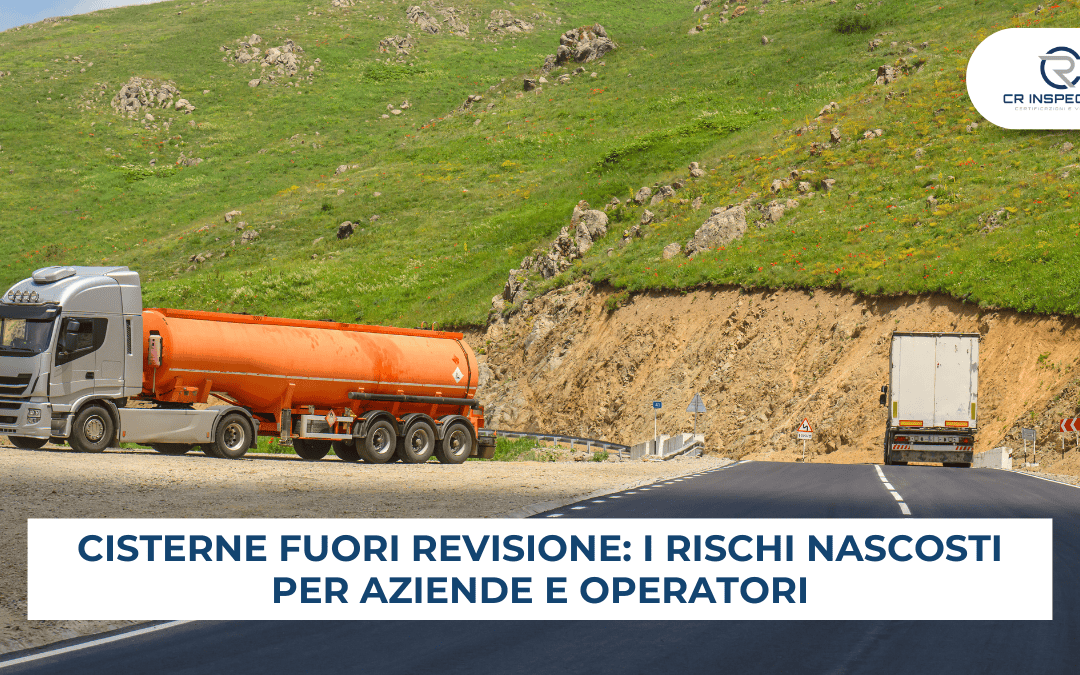
Tanks are among the transportable pressure equipment regulated by the TPED regulation, which defines requirements for design, production, verification and control throughout the life cycle of the vessel.
Each tank is designed to operate in high pressure conditions and must maintain mechanical strength, tightness and stability over time. For this reason, a periodic inspection is required, carried out by authorized bodies, which confirms the suitability for use and compliance with the operating conditions.
When a tank exceeds the overhaul deadline, its technical state evolves through progressive phenomena involving structure, accessories and materials.
Material degradation and reduced strength
The tanks are subjected to repeated stresses related to filling and emptying cycles, handling and storage. Over time, these factors affect the properties of the material.
Accidental impacts, falls or mechanical stress can generate localized deformations or micro-damage that accumulate during use. The inspection has the task of verifying that the structure maintains the safety conditions required by the TPED.
External corrosion and storage conditions
Exposure to humid environments, atmospheric agents or unsuitable storage conditions favors the appearance of corrosion phenomena on the surface of the tanks.
Corrosion progressively reduces the useful thickness of the material and can compromise the vessel’s ability to withstand operating pressures. In some cases, the phenomenon evolves silently, making it necessary to carry out a technical analysis to identify it.
TPED compliance and operational validity
The TPED regulation requires that each tank maintains its compliance through controls and inspections carried out by Notified Bodies. Each piece of equipment is identified by markings and documentation that certify its suitability for use.
Deadline management is a central element in ensuring business continuity and compliance.
Impact on tank management
The presence of uninspected tanks affects the overall availability of equipment and the scheduling of activities that depend on the use of pressurized gas.
Unstructured inspection management can generate misalignments between operational demand and actual availability, with consequences on the planning of production and maintenance activities.
Scheduling inspections allows you to maintain an efficient and constantly available equipment fleet.
Safety throughout the use cycle
The tanks go through different operational phases that include transport, storage, use and refilling. Each phase introduces stresses that affect the overall state of the vessel.
Periodic inspection is a key control point within the TPED system, with the aim of ensuring that each tank maintains adequate safety features throughout its life cycle.
CR Inspection, support for TPED equipment
CR Inspection supports companies and operators in the management of tank checks and inspections according to TPED regulations, through qualified technicians and certified procedures.
The service includes control, technical support and compliance management activities, with the aim of ensuring security, traceability and business continuity.
For information, you can contact the service contact person, Ilaria, at +39 3755409878 or by email at segreteria.tped@crinspection.it